ICAEW chart of the week: US federal budget baseline projections

19 February 2021: Congressional Budget Office expects a decade of trillion-dollar deficits as the US public finances are hit by the pandemic.

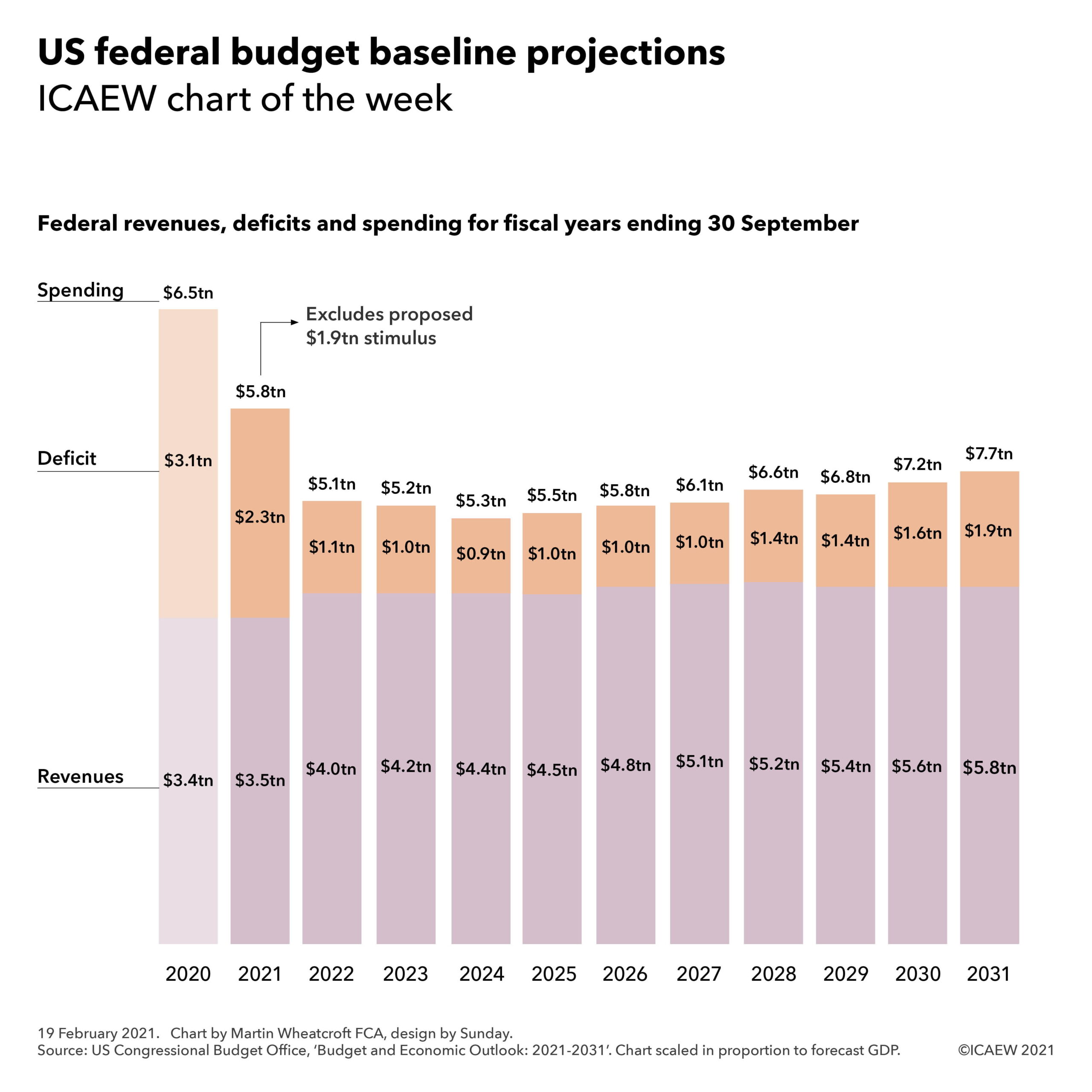
The US Congressional Budget Office (CBO) recently updated its ten-year fiscal projections for the federal budget, providing the subject for this week’s #icaewchartoftheweek. 

As the chart illustrates, there was a shortfall of $3.1tn between revenues and spending by the federal government in the year ended 30 September 2020, with a projected deficit of $2.3tn in the current financial year and deficits ranging from $0.9tn to $1.9tn over the coming decade.

The CBO is at pains to stress that its projections are not a forecast of what will happen but instead, provide a baseline against which decisions can be assessed. This is particularly relevant at the moment as Congress debates a potential $1.9tn stimulus plan that would increase this year’s deficit significantly if passed.

On the path shown in the projections, the CBO calculates that debt held by the public will increase from $21.0tn (100% of GDP) in 2020 up to $35.3tn (107% of GDP) by 2031. Will policymakers in the US be comfortable in continuing to run with such a high level of debt compared with pre-pandemic levels of around 80% of GDP and a pre-financial crisis level of less than 40%?

The projections are based on assumed economic growth excluding inflation of 4.6% in the current financial year following on from a fall of 3.5% last year, with the recovery continuing into 2022 with growth of 2.9%. Economic growth over the following nine years to 2031 is expected to average around 1.9%. This is much lower than the average rate of growth experienced before the financial crisis just over a decade ago but may still prove optimistic given the potential for a recession at some point over the next ten years.

The UK counterpart to the CBO – the Office for Budget Responsibility (OBR) – is currently working its abacus quite hard on updating its five-year projections ready for the Budget on 3 March. The OBR’s projections will be extremely useful in understanding the near-term path in the UK’s public finances, including the effect of any tax and spending announcements that may be featured in the Budget. Unfortunately, they will be less useful than the CBO’s projections in that they are not expected to provide a refreshed baseline for the second half of the decade when the hard work of starting to repair the public finances is expected to take place.

This chart was originally published by ICAEW.

ICAEW chart of the week: Japan Budget 2021-22

5 February 2021: This week’s chart focuses on the Japanese economy as it seeks to return to relative fiscal normality in the year commencing 1 April 2021, following multiple supplementary budgets in its current financial year.

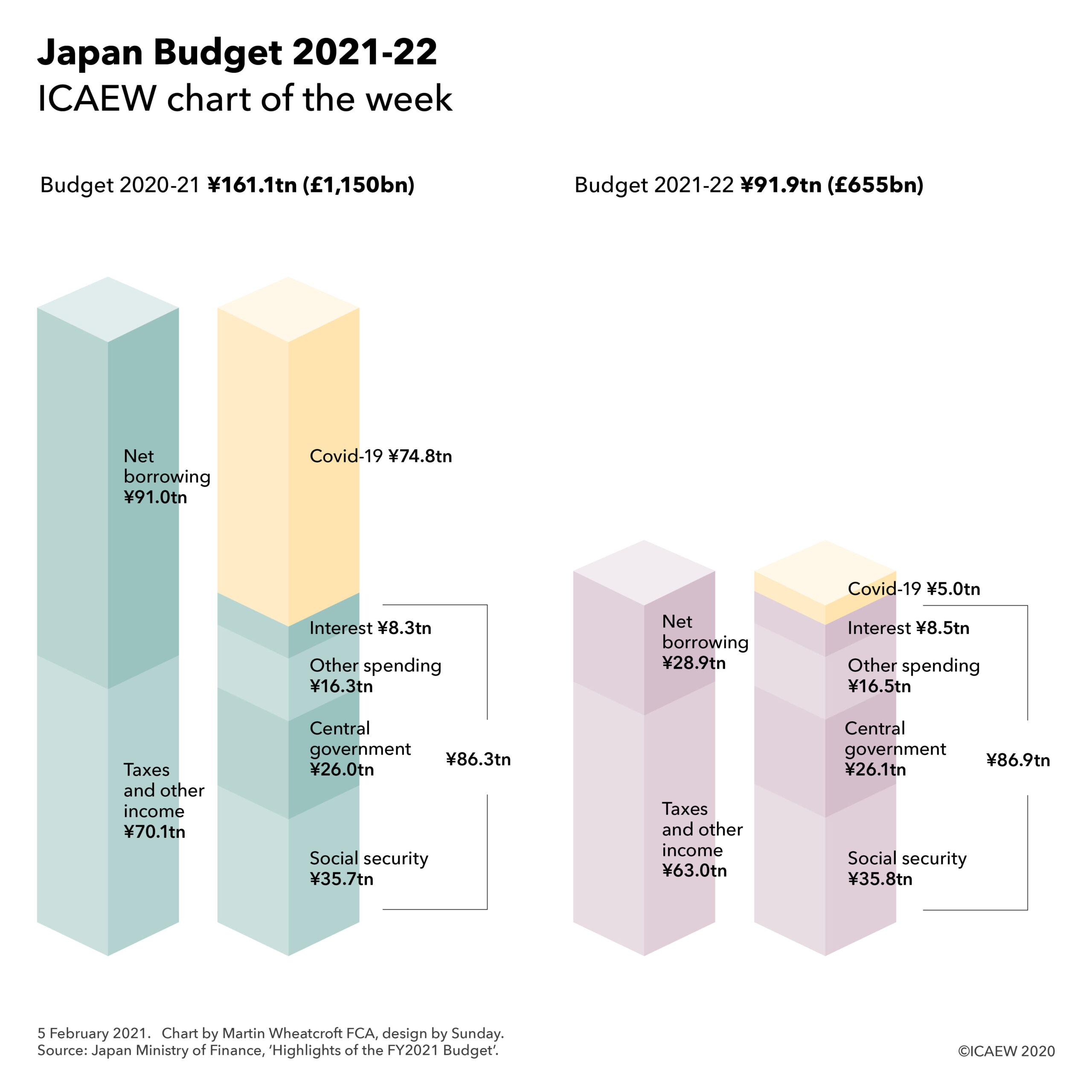
The #icaewchartoftheweek is full of anticipation for the UK Budget next month and so decided to take a look at how the Japanese central government plans to borrow ¥28.9tn (£205bn) in the year to 31 March 2022. Together with taxes and other income of ¥63.0tn (£450bn), this will be used to fund ¥86.9tn (£620bn) of spending and a ¥5.0tn (£35bn) COVID-19 contingency.

This follows a significant amount of borrowing in the current financial year, with the 2020-21 Budget amended by three supplementary Budgets in response to the coronavirus pandemic. If temporary and special measures are excluded, the 2021-22 Budget reflects a 0.7% increase in spending over the previous year’s ¥86.3tn (£615bn) pre-COVID budget.

Spending comprises ¥35.8tn (£255bn) on social security, central government spending of ¥26.1tn (£185bn), and other spending of ¥16.5tn (£120bn), with the latter principally relating to transfers and grants to local government. Interest of ¥8.5tn (£60bn) is only marginally higher than the previous year’s ¥8.3tn, despite a 9% increase in the level of government bonds outstanding to ¥990tn (£7tn) – equivalent to 177% of GDP – at March 2022.

Borrowing has increased over pre-pandemic levels, with net borrowing of ¥28.9tn (£205bn) in 2021-22 compared with the 2020-21 pre-pandemic budget of ¥18.0tn (£130bn, not shown in the chart). This is principally driven by a 10% decline in anticipated income, with taxes and other income of ¥63.0tn (£450bn) falling from the ¥70.1tn (£500bn) originally budgeted for the current year (but not actually received).

The chart does not include the substantial amounts of taxation raised and spent by its 47 regional prefectures and so does not provide a complete fiscal picture for Japan. However, it does provide an indication of how the Japanese public finances have been able to respond to the pandemic.

The Japanese government will be hoping that there will be no need for supplementary Budgets in the coming financial year, as no doubt will UK Chancellor Rishi Sunak as he prepares for his government’s Budget on 3 March.

This chart was originally published by ICAEW.

PAC demands improvements in the Whole of Government Accounts

4 February 2021: The Public Accounts Committee has said production of the WGA should be speeded up and a better commentary is needed on the government’s financial position and exposure to forward-looking fiscal risks.

The Public Accounts Committee (PAC) recently issued a report on the Whole of Government Accounts (WGA). The PAC says that while the WGA is a world-leading document in helping the public understand both how government has used taxpayers’ money and what challenges face public finances in the future, the focus on the WGA being a backwards-looking document considerably hampers its usefulness as a tool for information, accountability and planning.

In 2018-19, the WGA reported public sector assets and liabilities of £2.1tn and £4.6tn respectively, equivalent to approximately £75,000 and £165,000 per household.

The PAC is particularly concerned about how the WGA sets out the Government’s financial position and its exposure to financial risks, including:

  • How income and expenditure are expected to change in the future and what this means for the sustainability of the public finances
  • How fiscal sustainability risks are being managed by HM Treasury, including from EU exit, covid-19 and other emerging risks
  • HM Treasury’s role in managing specific risks in the balance sheet, in particular the £152bn nuclear decommissioning obligation and the £85bn clinical negligence liability
  • What analysis and scenario planning has been done, for example, to address the impact that increases in interest rates might have on the economy and government spending
  • What HM Treasury is doing to address the fiscal sustainability of local authorities, particularly in the light of concerns over local authority investment in commercial property and the weaknesses in local audit and transparency of local authority financial reporting identified by the Redmond review.

The PAC was critical of the lack of more detailed disclosures in particular areas, such as the cost of exiting the EU where more information on the EU exit settlement and cross-government spending on preparations was needed. COVID-19 spending will need to be fully captured to assess both the true cost to the government and whether government can deliver.

The PAC acknowledges that improvements have been made in the quality of analysis in the WGA and work on better categorisation of expenditure across government to improve analysis is underway. In particular, there are plans to implement a new chart of accounts and a new financial consolidation system (OSCAR II) in 2021.

The 2018-19 WGA took 15 months to produce and the PAC highlights how pandemic-driven delays in producing departmental and local government financial statements last year will present significant challenges in producing the 2019-20 WGA in less than 14 months. 

The timetable remains significantly more than the two to three months typically taken for large multinational listed companies to produce audited financial statements, the five to six months taken by New Zealand, Canada and Australia, or the six to nine months that might be reasonably possible given the WGA incorporates local as well as central government.

The PAC concludes by commenting that the WGA still does not provide Parliament and the public with the information needed to understand the government’s financial position and exposure to fiscal risk. 

Using the annual report to give the reader an understanding of the development, performance and position of an organisation’s business, including a consideration of how forward-looking risk is managed, is standard practice across the private and public sector. The WGA falls significantly below this standard and is not meeting the needs of its users.

Martin Wheatcroft FCA, external advisor to ICAEW on public finances, commented: “The PAC is right to highlight how far HM Treasury still needs to go in improving the WGA to provide Parliament and the public with the comprehensive overview of financial performance, position and risks that a good quality annual report and financial statements can do. 

HM Treasury should be applauded for putting the UK at the forefront of international developments in public sector financial reporting when it introduced the WGA a decade ago. However, progress since then has been hampered by inadequate internal reporting systems and underinvestment in financial analysis. The WGA remains far behind best practice.

Speeding up production and improving the clarity and quality of analysis will not only make the WGA much more useful to Parliament and citizens, but it will help improve the decision-making within government that is needed to put the public finances onto a sustainable path.”

A difficult winter ahead for the public finances

23 December 2020: The UK public sector incurred a £31.6bn deficit in November, bringing the total shortfall over eight months to £240.9bn. Debt reached an all-time high of £2.1tn.

Commenting on the latest public sector finances for November 2020, published on Tuesday 22 December 2020 by the Office for National Statistics (ONS), Alison Ring sector director at ICAEW, said: 

“A slightly more optimistic forecast for GDP from the Office for Budget Responsibility last month resulted in the UK’s debt to GDP ratio being revised downwards, despite public sector debt having reached an all-time high of £2.1tn in November. However, this optimism may prove to have been premature, with reports suggesting another national lockdown in the new year and disruption in international trade foretelling a potentially difficult winter ahead for the economy and the public finances. 

Prospects for the spring will depend on how quickly the vaccine can be rolled out, whether testing and tracing can deliver rapid and reliable results, and the extent to which disruption at borders now and after 1 January can be minimised.”

Public sector finances for November

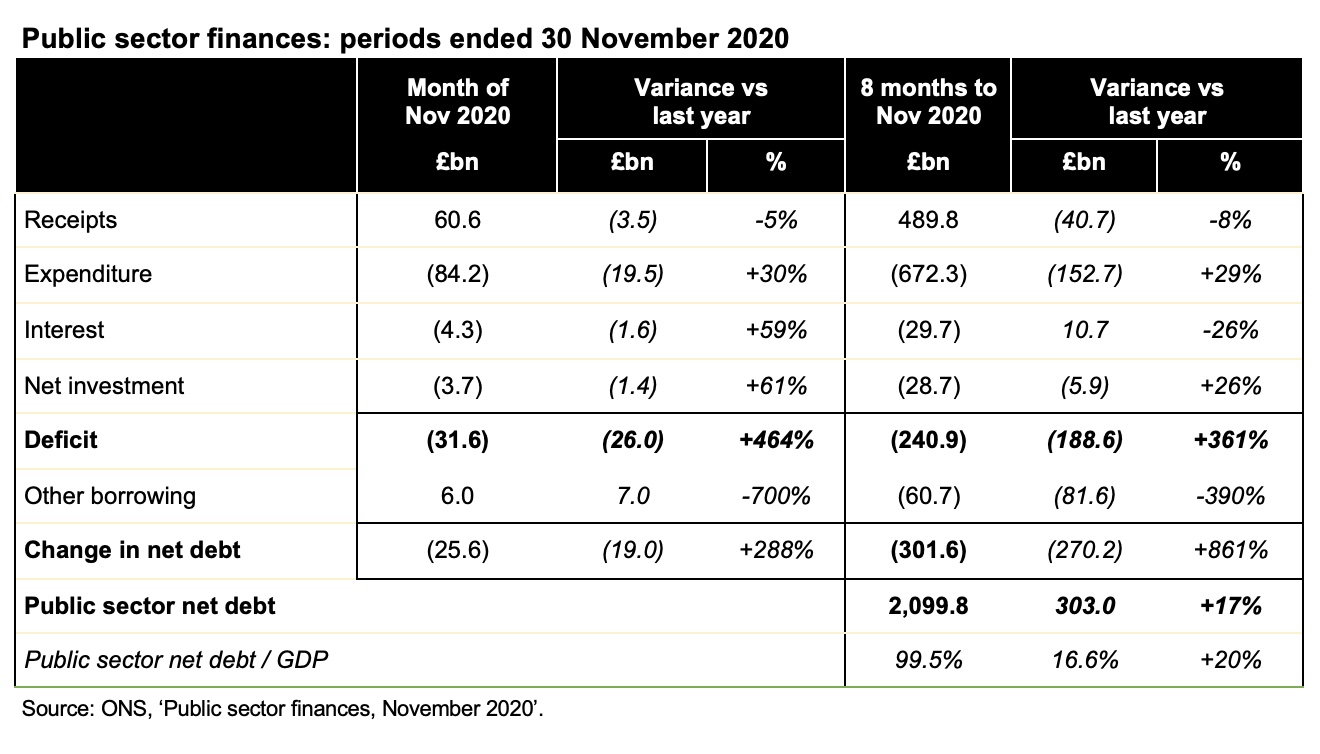
The latest public sector finances reported a deficit of £31.6bn in November 2020, a cumulative total of £240.9bn for the first eight months of the financial year. This is £188.6bn more than the £52.3bn recorded for the same period last year.

Falls in VAT, corporation tax and income tax drove lower receipts, while large-scale fiscal interventions resulted in much higher levels of expenditure. Net investment is greater than last year, as planned, while the interest line has benefited from ultra-low interest rates.

Public sector net debt increased to £2,099.8bn or 99.5% of GDP, an increase of £301.6bn from the start of the financial year and £303.0bn higher than in November 2019. This reflects £60.7bn of additional borrowing over and above the deficit, most of which has been used to fund coronavirus loans to business and tax deferral measures.

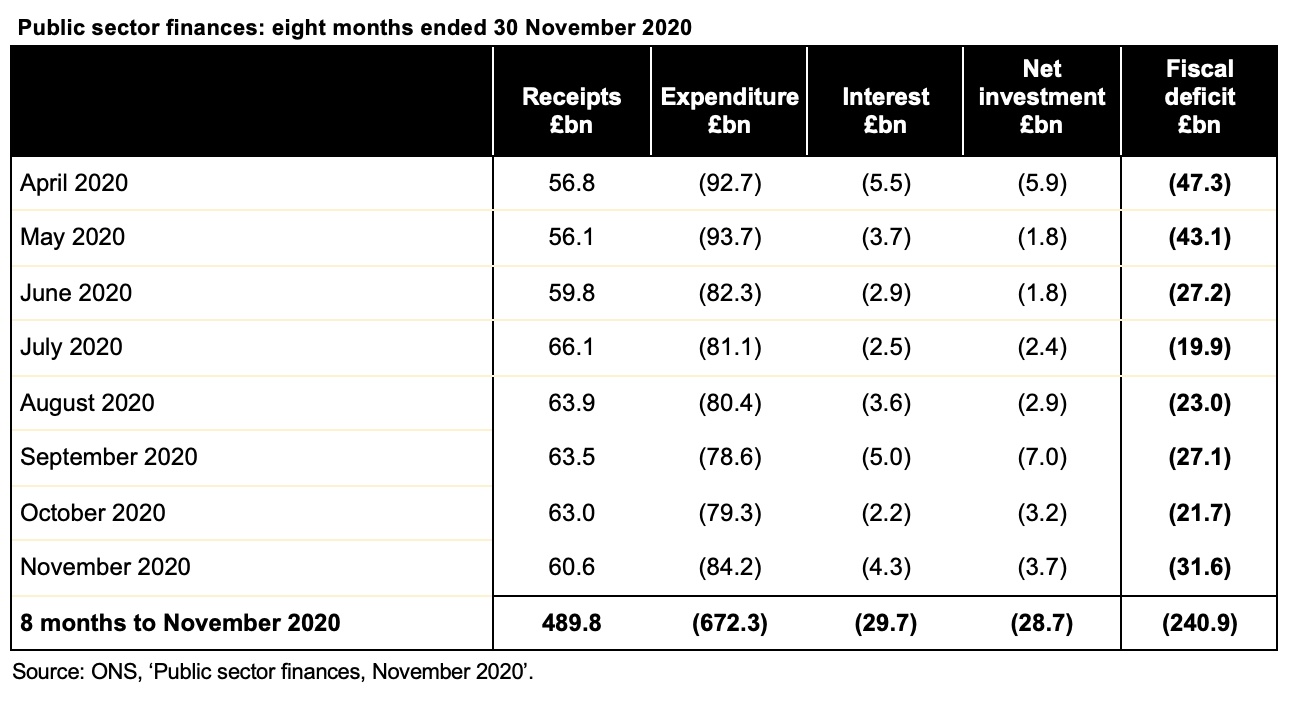
Table of results for the month of November and for the 8 months then ended, together with variances against the prior year. Click on the link at end of post to visit the original ICAEW article for a readable version.

The combination of receipts down 8%, expenditure up 29% and net investment up 26% has resulted in a deficit for the eight months to November 2020 that is over four times the budgeted deficit of £55bn for the whole of the 2020-21 financial year set in the Spring Budget in March, despite interest charges being lower by 26%. The cumulative deficit is approaching five times as much as for the same eight-month period last year.

Cash funding (the ‘public sector net cash requirement’) for the month was £20.7bn, bringing the cumulative total this financial year to £295.8bn, compared with £14.9bn for the same eight-month period in 2019. 

Interest costs have fallen despite much higher levels of debt, with extremely low interest rates benefiting both new borrowing to fund government cash requirements and borrowing to refinance existing debts as they have been repaid.

The deficit remains on track to approach the £393.5bn forecast for the financial year to March 2021 by the Office for Budget Responsibility in the Spending Review once bad debts not yet recognised on coronavirus loans are included.

Upwards revisions to GDP based on the latest Office for Budget Responsibility forecasts have reduced the debt to GDP ratio for this and previous months to below 100% of GDP. However, the likelihood of a further national lockdown in the new year and for disruption in international trade with the end of the EU transition period could depress prospects for GDP growth in 2021.

Table of results each of the 8 months to November 2020. Click on the link at end of post to visit the original ICAEW article for a readable version.
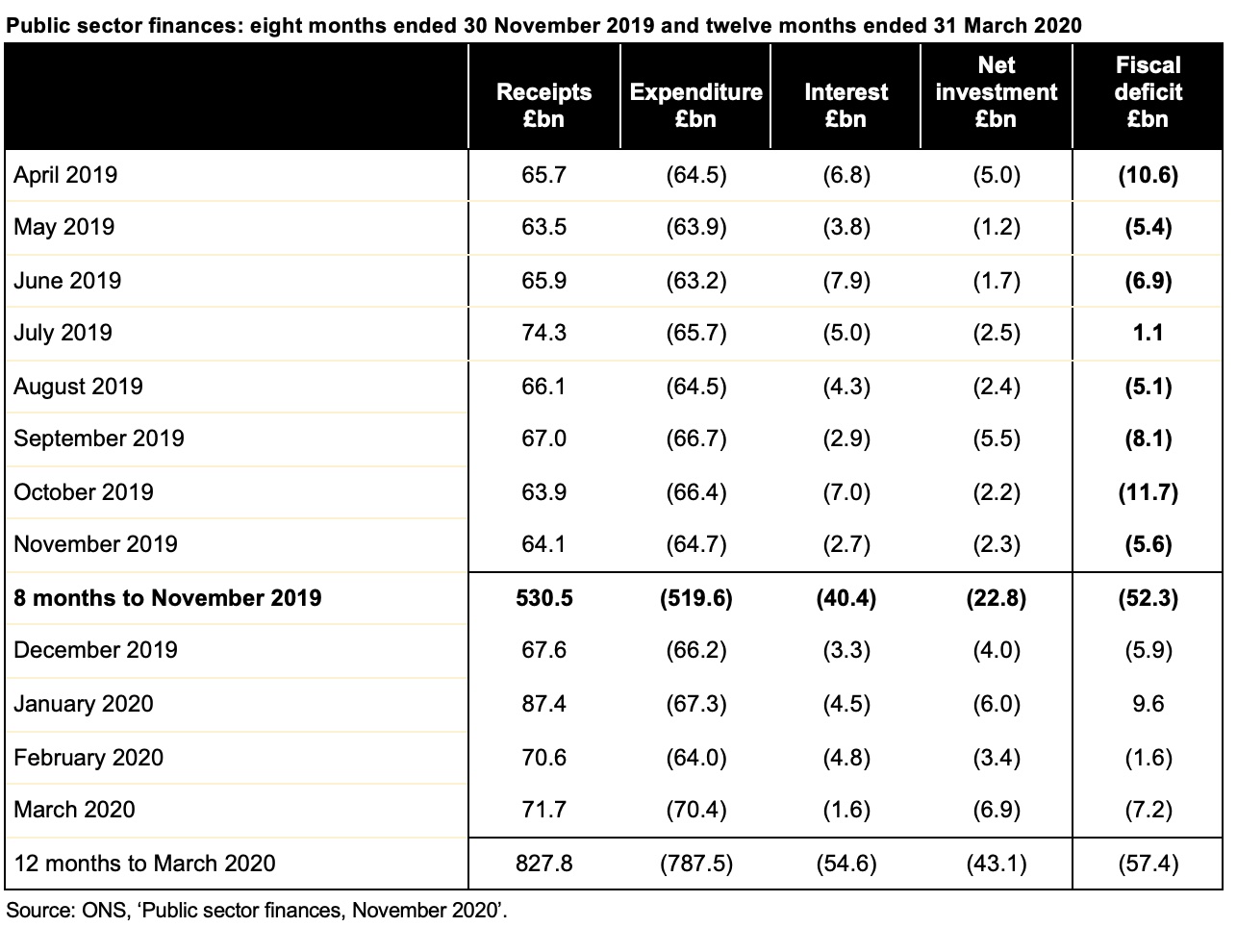
Table of results each of the 8 months to November 2019 and of the 12 months ended 31 March 2020. Click on the link at end of post to visit the original ICAEW article for a readable version

Caution is needed with respect to the numbers published by the ONS, which are expected to be repeatedly revised as estimates are refined and gaps in the underlying data are filled.

The ONS made a number of revisions to prior month and prior year fiscal numbers to reflect revisions to estimates and changes in methodology. These had the effect of reducing the reported fiscal deficit in the first seven months from the £214.9bn reported last time to £209.3bn and increasing the reported deficit for 2019-20 from £56.1bn to £57.4bn.

This article was originally published by ICAEW.

ICAEW chart of the week: Government bond yields

11 December 2020: Ultra-low or negative yields provide governments with an opportunity to borrow extremely cheaply, but what will happen if and when interest rates rise?

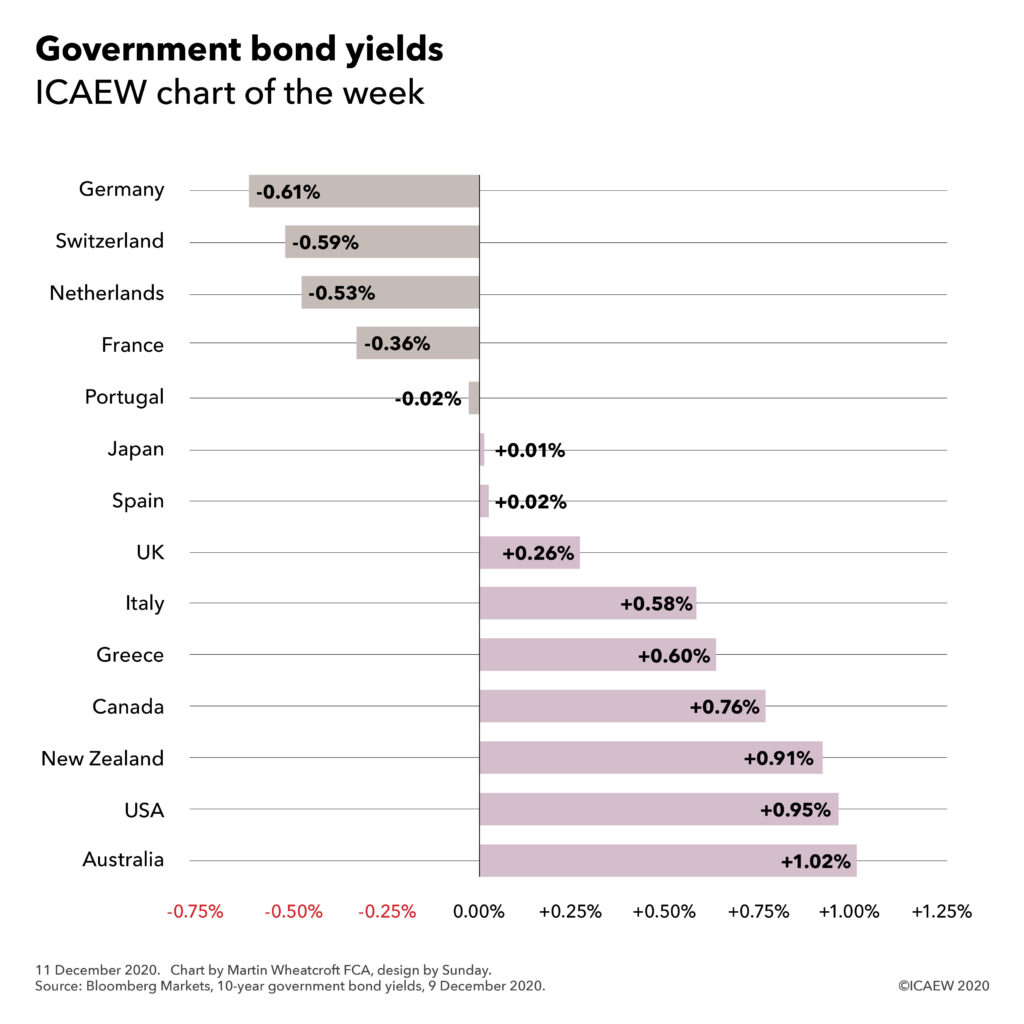
Government 10-year bond yields

Germany -0.61%, Switzerland -0.59%, Netherlands -0.53%, France -0.36%, Portugal -0.02%, Japan +0.01%, Spain +0.02%, UK +0.26%, Italy +0.58%, Greece +0.60%, Canada +0.76%, New Zealand +0.91%, USA +0.95%, Australia +1.02%

On 9 December, the benchmark ten-year government bond yield for major western economies ranged from -0.61% for investors in German Bunds through to 0.95% for US Treasury Bonds and 1.02% for Australia Government Bonds, as illustrated in the #icaewchartoftheweek.

One of the more astonishing developments of the last decade or so has been the arrival of an era of ultra-low or negative interest rates, even as governments have borrowed massive sums of money to finance their activities. This is not only a consequence of weak economic conditions and the slowing of productivity-led growth, but it has also been driven by the monetary policy actions of central banks through quantitative easing operations that have driven down yields by buying long-term fixed interest rate government bonds in exchange for short-term variable rate central bank deposits.

For bond investors this has been a wild ride, with the value of existing bonds sky-rocketing as central banks have come calling to buy a proportion of their holdings, crystallising their gains. The downside is the extremely low yields available to debt investors on fresh purchases of government bonds, which in some cases involve paying governments for the privilege of doing so.

Yields vary according to maturity, with yields on UK gilts ranging from -0.08% on two-year gilts through to 0.26% for 10-year gilts (as shown in the chart) up to 0.81% on 30-year gilts. In practice, the UK issues debt with an average maturity between 15 and 20 years, so the current average cost of its financing is higher than that shown in the chart at between 0.48% and 0.77% being the yields on 15-year and 20-year gilts respectively. This has the benefit of locking in low interest rates for longer, in contrast with most of the other countries shown that tend to issue debt with an average maturity of less than ten years.

Quantitative easing complicates the picture, as by repurchasing a significant proportion of government debt and swapping it for central bank deposits, central banks have reversed the security of fixed interest rates locked in to maturity with a variable rate exposure that will hit the interest line immediately if rates change. 

In theory, this should not be a problem, as higher interest rates are most likely to accompany stronger economic growth and hence higher tax revenues with which to pay the resultant higher debt interest bills, but in practice treasury ministers are not so sanguine. In leveraging public balance sheets to finance their responses to COVID-19 – on top of the legacy of debt from the financial crisis – governments have significantly increased their exposure to movements in interest rates, just as other fiscal challenges are growing more pressing.

Expect to hear a lot more over the coming decade about the resilience of public finances as governments seek to reduce gearing and reduce their vulnerability to the next unexpected crisis, whenever that may occur.

This chart was originally published on the ICAEW website.

ICAEW chart of the week: Spending Review 2020

In the wake of the government’s Spending Review, this week’s chart focuses on the bigger picture and looks at the scale of public spending in relation to the size of the overall economy.

Spending Review 2020: Public spending as % of GDP

2019-20: Department spending 17.0% + other spending 12.3% + welfare 10.3% + covid 0.2% = 39.8%

2020-21: 19.3% + 13.3% + 11.5% + 12.2% = 56.3%

2021-22: 19.5% + 12.4% + 10.6% + 2.6% = 45.1%

2022-23: 19.2% + 12.2% + 10.6% = 42.0%

2023-24: 19.2% + 12.1% + 10.5% = 41.8%

2024-25: 19.3% + 12.1% + 10.5% = 41.9%

2025-26: Departmental spending 19.3% + other spending 12.0% + welfare 10.5% = 41.8%

There was a lot of substance in the Spending Review 2020 announced this week, with a lot more going on under the surface with – for example – the launch of the National Infrastructure Strategy. However, we thought we would focus on the bigger picture for the #icaewchartoftheweek and to look at the scale of public spending in relation to the size of the overall economy.

Of course, the current financial year has seen a massive expansion in the amount of public spending – up from £884bn or 39.8% of GDP of £2,218bn in 2019-20 to a revised budget of £1,165bn or 56.3% of GDP of £2,069bn. The combination of higher spending and a smaller economy this year makes for an eye-watering percentage.

Next financial year will see further COVID support measures adding to public spending, but the key takeaway from the chart is that public spending is expected to persist at around 42% of GDP from 2022-23 onwards, reflecting a permanently smaller economy following the pandemic combined with slightly higher spending in real terms. This is 2% higher than the just under 40% seen in 2019-20 and 3%-4% higher than the 38%-39% longer-run average.

Around half of the increase in departmental spending seen in the chart relates to capital investment in line with the government’s infrastructure plans, while the remainder relates to operational spending with more for health, education and defence being partially offset by the reduction in development spending and the one-off public sector pay freeze.

With scope for substantial reductions in public spending seen to be limited, there are two main routes for covering this increase in costs – economic growth to boost the size of the economy or higher taxes. The government will be hoping that its increase in capital investment will help to deliver on the former, but it appears increasingly likely that tax rises will be needed over the course of the coming decade.

This chart was originally published on the ICAEW website.

Spending Review 2020: public finances dominated by COVID aftermath

26 November 2020: The Office for Budget Responsibility presented its latest economic and fiscal forecasts to accompany yesterday’s Spending Review. As expected, the forecasts were far from pretty.

In its latest economic and fiscal outlook, the Office for Budget Responsibility (OBR) confirmed that economic and fiscal damage from the pandemic is severe and will have a lasting effect. 

The fiscal watchdog now expects to see a sea of red ink across the first half of the coming decade: a £394bn deficit (19% of GDP) this year and the UK still running a fiscal deficit of over £100bn in five years’ time. This will be a decade after the point at which a previous Chancellor, George Osborne, hoped to have eliminated the deficit completely.

This is the highest ever fiscal deficit experienced in peacetime by the UK and reflects an additional £21bn for the cost of extending the furlough scheme across the winter and £30bn in anticipated write-offs of CBILS and other lending packages.

The fiscal pain is expected to continue into the next financial year starting on 1 April 2021, with the government planning an additional £55bn in COVID-related spending. This is offset to an extent by £10bn in lower departmental budgets, partly as a consequence of the one-year public sector pay freeze. The government says that despite this, ‘core day-to-day department spending’ is growing at 3.8% a year on average in real terms from 2019-20 to 2021-22.

Deficit to remain high for years to come

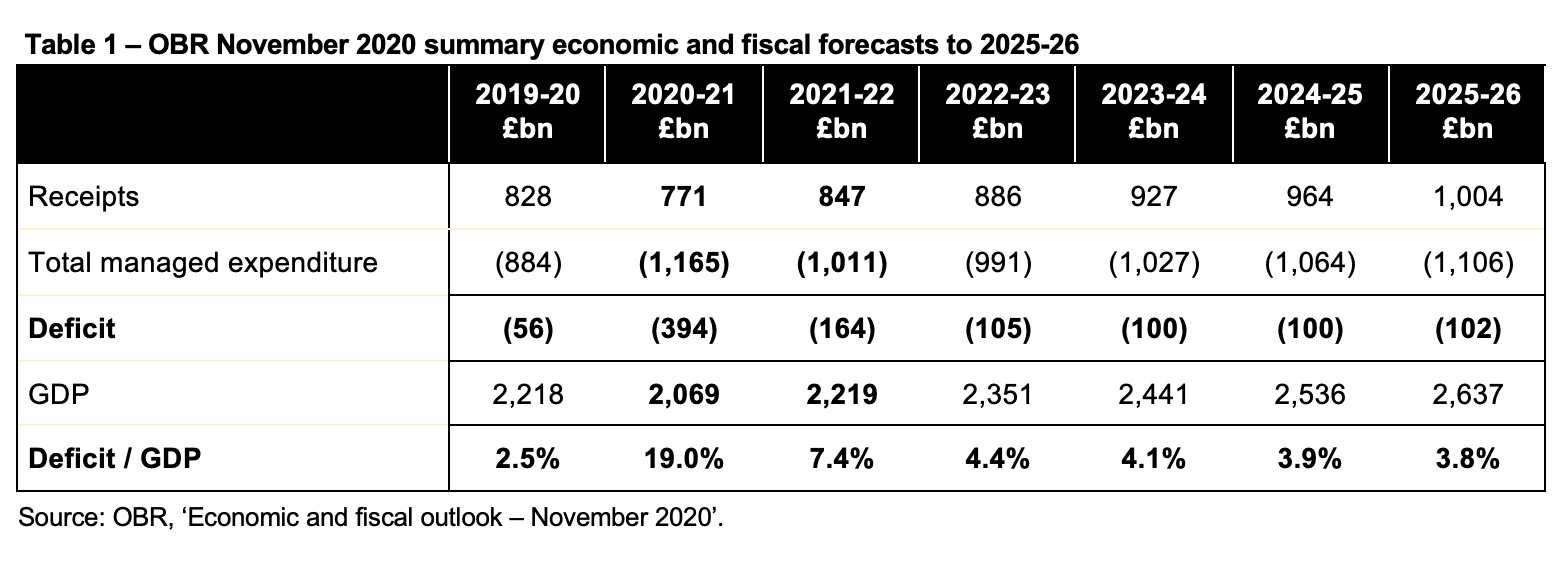
Table 1 below highlights how the deficit is forecast to be £164bn next year and to remain at over £100bn over the rest of the forecast period. This is despite GDP recovering in 2021-22 to the same level as last year (about 4% lower once inflation is taken into account) with the Chancellor hoping for strong growth to continue into 2022-23 before returning to trend after that.

Table 1 - OBR November 2020 summary economic and fiscal forecasts to 2025-26.

Click on link to ICAEW website for a readable version of this table.

The Spending Review boasts that it includes £100bn of central government capital investment in 2021-22, a £27bn real-terms increase compared with 2019-20. This reflects planned increases in previous budgets, with no new funding included in yesterday’s announcement. There are concerns about how deliverable the government’s capital investment plans are, with the OBR increasing its estimate for capital budget underspends and scaling back expectations of local authority and public corporation capital expenditure by £4bn in 2021-22 and by £3bn in subsequent years. These are both likely to reduce any positive impact that may come from the £4bn ‘levelling up fund’ announced by the Chancellor

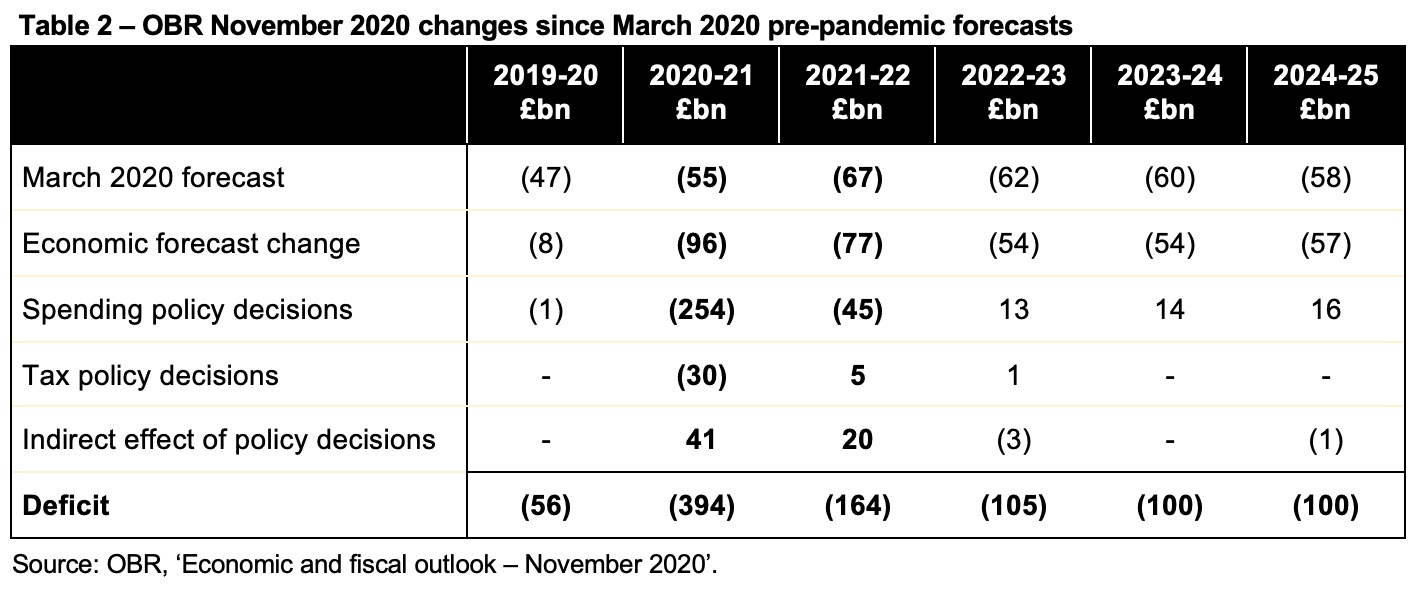
Table 2 summarises the changes between the pre-pandemic forecasts presented in the Spring Budget in March 2020 and the latest forecasts published yesterday.

Table 2 - OBR November 2020 changes since March 2020 pre-pandemic forecasts

Click on link to ICAEW website for a readable version of this table.

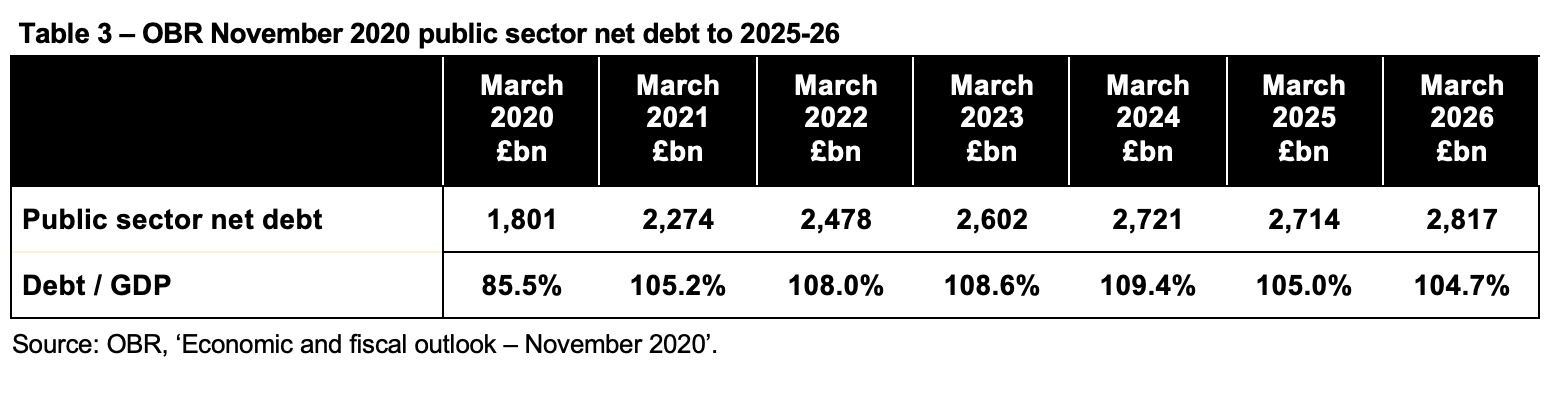
Table 3 illustrates how debt is expected to increase from £1.8tn in March 2020 to £2.3tn in March 2021 and to continue to grow to £2.8tn by March 2026, in excess of 100% of GDP throughout the next five years.

Fortunately for the government, the cost of the additional borrowing required to fund the deficit has continued to fall dramatically, with central government debt interest falling from £37bn in 2019-20 to £18bn in 2021-22, before gradually rising to £29bn in 2025-26.

Table 1 - OBR November 2020 public sector net debt to 2025-26

Click on link to ICAEW website for a readable version of this table.

Martin Wheatcroft FCA, external adviser to ICAEW on public finances, commented: “The Spending Review was pretty much as expected, with COVID-related spending extended into the next financial year and the trailed public sector pay freeze allowing the government to maintain its capital investment ambitions.

However, buried in the detail is an expectation by the OBR that it will be difficult to deliver those plans on schedule. Combined with lower capital expenditure by local government and public corporations, the hoped-for economic boost could prove elusive.

With the spending side buttoned-down for now, the focus will move to how the Chancellor plans to close the gap between receipts and spending, with the prospect of tax rises on the horizon. It is important the government takes this opportunity to develop a long-term fiscal strategy to address the long-term unsustainability of the public finances that needed addressing even before the pandemic added to the scale of the challenge.”

This article was originally published on the ICAEW website.

What is tomorrow’s Spending Review all about?

Major fiscal events can be confusing for those not familiar with the public finances – this brief explainer may help.

The primary purpose of the Spending Review announcement tomorrow by the Chancellor will be to set out the UK Government’s departmental spending plans for the 2020-21 financial year that starts on 1 April 2021, but there is a lot more going on than that.

Before going further, it is important to distinguish between the one-year Spending Review that will be presented and the three-year Comprehensive Spending Review (CSR) that was originally planned. The CSR has unfortunately been deferred until next year because of the uncertain economic outlook following the arrival of the coronavirus, with the Chancellor Rishi Sunak choosing to set department budgets for only the coming financial year. These budgets will have been based on bids submitted by each department that will have been pared back following extensive negotiations across Whitehall.

The process for establishing multi-year departmental budgets has now been deferred for the third year running, with the calling of the General Election last year resulting in Sajid Javid’s one-year Spending Round in 2019 and Brexit-related uncertainty resulting in one-year departmental spending allocations within Philip Hammond’s 2018 Budget. Although perhaps understandable on each individual occasion, the lack of medium-budget certainty for several years is far from ideal in terms of good financial management!

An important innovation last year was the setting of departmental capital budgets for two years rather than just one to provide greater certainty around capital programmes with long lead times. We are anticipating this will also be the case this time, although ICAEW has suggested extending capital budgets a further year in our letter to the Chief Secretary to the Treasury (the minister within HM Treasury with responsibility for public spending) in order to provide more certainty for long-term infrastructure projects.

Another exception to the shorter time horizon for this year’s Spending Review is the multi-year settlement for the Ministry of Defence announced last Thursday, which provides an additional £4bn a year over the next four years on top of the existing commitment to increase the defence budget by 0.5% in excess of inflation. This will underpin the Integrated Defence & Security Review expected to be published in early 2021.

Although headlined as a spending announcement, tomorrow’s statement will also constitute one of the two annual fiscal events where the Office for Budget Responsibility (OBR) is required by law to publish its Economic and Fiscal Outlook (EFO) containing financial forecasts for the next five years. These are not expected to be very pretty, with the coronavirus pandemic spreading red ink across not only the public finances this year, but also dragging down expected revenues and increasing spending in future years. These forecasts will also be much more uncertain than is normal, which might be one reason the Chancellor has not chosen to describe this event as an Autumn Statement.

The EFO will cover not only planned spending by central government departments – known as departmental expenditure limits (DEL) – but also welfare, interest and other types of expenditure driven by economic conditions – known as annually managed expenditure (AME). Combined with expectations for tax and other receipts in 2020-21, it will roll these forecasts forward a further four years to 2024-25 to provide a five-year forecast for the fiscal deficit (the shortfall between receipts and spending) and public debt. There will be even greater caveats than normal not only in the forecasts but also in the estimate for the remainder of the current financial year.

This is not a full-blown Budget and so we do not expect to see many permanent tax changes beyond a few that were announced last week, although the Chancellor could take this opportunity to extend some temporary tax measures in addition to the extension of £1m Annual Investment Allowance temporary cap to the end of 2021. For example, he is likely to be considering whether or not to extend relief from business rates currently scheduled to end in March 2021 into the next financial year. There could also be an announcement about National Insurance thresholds for next year.

Fiscal events are often accompanied by other publications, with the long-delayed National Infrastructure Strategy anticipated to set out how the Government plans to deliver the ‘Ten Point Plan for a Green Industrial Revolution’ announced by the Prime Minister last week. Making the Government’s ambitious infrastructure investment plans a reality will take a lot more than just allocating money in a Spending Review spreadsheet; it will also be critical to have a clear strategy, faster decision making, strong delivery capabilities, and the right framework for attracting private sector investment. ICAEW’s response to the Infrastructure Finance Review last year addressed many of these issues.

Other updates are likely to include a revised remit for the Debt Management Office (DMO) to raise funds over the course of the rest of the financial year and progress reports on HM Treasury projects such as the Balance Sheet Review.

In summary, Wednesday’s announcement will still be very important despite the delay in the Budget until the spring and the deferral of the CSR to next year.

TermDescription
Spending ReviewOn this occasion, the setting of budgets for central government departments for 2021-22 and capital budgets for 2021-22 and 2022-23.
2020-21The current financial year – from 1 April 2020 to 31 March 2021.
2021-22The next financial year – from 1 April 2021 to 31 March 2022.
Autumn or Spring StatementThe second major fiscal event each year after the Budget at which the Chancellor presents an update on the public finances. This can sometimes include new tax and spending measures but is not required to. Tomorrow’s announcement is technically an Autumn Statement in addition to the Spending Review.
BudgetThe primary fiscal event each year in which the Chancellor of the Exchequer sets out plans for tax, spending and borrowing to finance government activities for the coming financial year and medium-term forecasts for the public finances. The Budget planned for this autumn was postponed until March 2021.
Chancellor of the ExchequerRishi Sunak MP, the cabinet minister and head of HM Treasury responsible for the economic matters and for the public finances.
Chief Secretary to the TreasurySteve Barclay MP, the most senior minister at HM Treasury after the Chancellor, with primary responsibility for public spending and for negotiating the Spending Review with departments.
Comprehensive Spending Review (CSR)A multi-year set of departmental operating and capital budgets, typically covering three years. A CSR was planned for 2020 but has been delayed until next year.
DebtPublic sector net debt (PSND) is the primary measure of financial position used by the Government within the National Accounts. It comprises debt owed to external parties less cash and other liquid financial assets and excludes some debt-like liabilities such as private-finance initiative embedded lease obligations and non-liquid loan receivables. The majority of public debt is raised by the Debt Management Office (DMO) selling government bonds (principally gilts) to professional investors. National Savings & Investments also raises money by taking retail deposits from the public.
DeficitThe fiscal deficit, officially known as public sector net borrowing (PSNB), is the primary measure of financial performance used by the Government. It is the shortfall between receipts and total managed expenditure calculated in accordance with statistics-based National Accounts rules. Despite its official name it does not equal the movement in public sector net debt as it excludes borrowing for other purposes (such as to fund lending to businesses) in addition to cash timing differences. The Government uses a modified form of the deficit that excludes the state-owned NatWest Group (formerly The Royal Bank of Scotland).
DEL and AMEDepartment expenditure limits and annually managed expenditure, being the two categories government spending is divided into. DEL comprises programme and administration costs incurred by central government departments, while AME consists of other types of expenditure such as welfare, interest, devolved administrations, local government and a number of other activities. DEL and AME are both net of ancillary income such as fees and charges and are measured in accordance with UK Government-specific ‘resource accounting’ rules that differ from both operating and capital expenditure reported in financial statements under International Financial Reporting Standards and the fiscal numbers reported in the National Accounts under international statistical standards.
Resource DEL and Resource AMEThe government equivalent of expenditure, net of ancillary income.
Capital DEL and Capital AMEThe government equivalent of capital expenditure, net of proceeds from the sale of assets.
Economic and Fiscal Outlook (EFO)A set of economic and financial forecasts prepared by the independent Office for Budget Responsibility (OBR) that combines extrapolations of government spending plans from the most recent Spending Review with projections for tax and other receipts, welfare spending, interest and other costs. The fiscal forecast usually comprises a revised estimate for the current financial year and projections for the next five financial years based on the economic assumptions determined by the OBR.
Economic growthAn increase in GDP in excess of the GDP deflator.
GDPGross Domestic Product, an estimate of the total value of transactions within the UK economy.
GDP deflatorA measure of inflation across all sectors of the economy (including government) that is used in the economic and fiscal forecasts. It differs from other measures of inflation such as the consumer price index (CPI), the consumer-price index including housing (CPIH) and the retail prices index (RPI).
Public sectorThe UK Government and the Scottish, Welsh and Northern Irish devolved administrations and bodies they directly control (central government), regional and local authorities, police & crime commissioners, fire services, Transport for London and bodies they control (local government), and the Bank of England and government-owned businesses (public corporations).
Supply EstimatesThe formal process of obtaining Parliamentary approval for government spending each year. These convert the budgets agreed with the Treasury for both DEL and AME each year and convert them into a formal legal authorisation to incur expenditure. Supplementary Supply Estimates during the course of the financial year are sometimes needed if budgets need to be adjusted upwards.
Total managed expenditure (TME)The combination of expenditure and net investment (capital expenditure less depreciation) measured in accordance with the statistics-based National Accounts rules.
Whole of Government Accounts (WGA)Consolidated financial statements for the public sector prepared in accordance with International Financial Reporting Standards. The WGA recognises a wider range of assets and liabilities than are reported in the fiscal numbers and an accounting loss that includes long-term pension costs, nuclear decommissioning, clinical negligence and other costs that are excluded from the fiscal deficit.

This article was originally published on the ICAEW website.

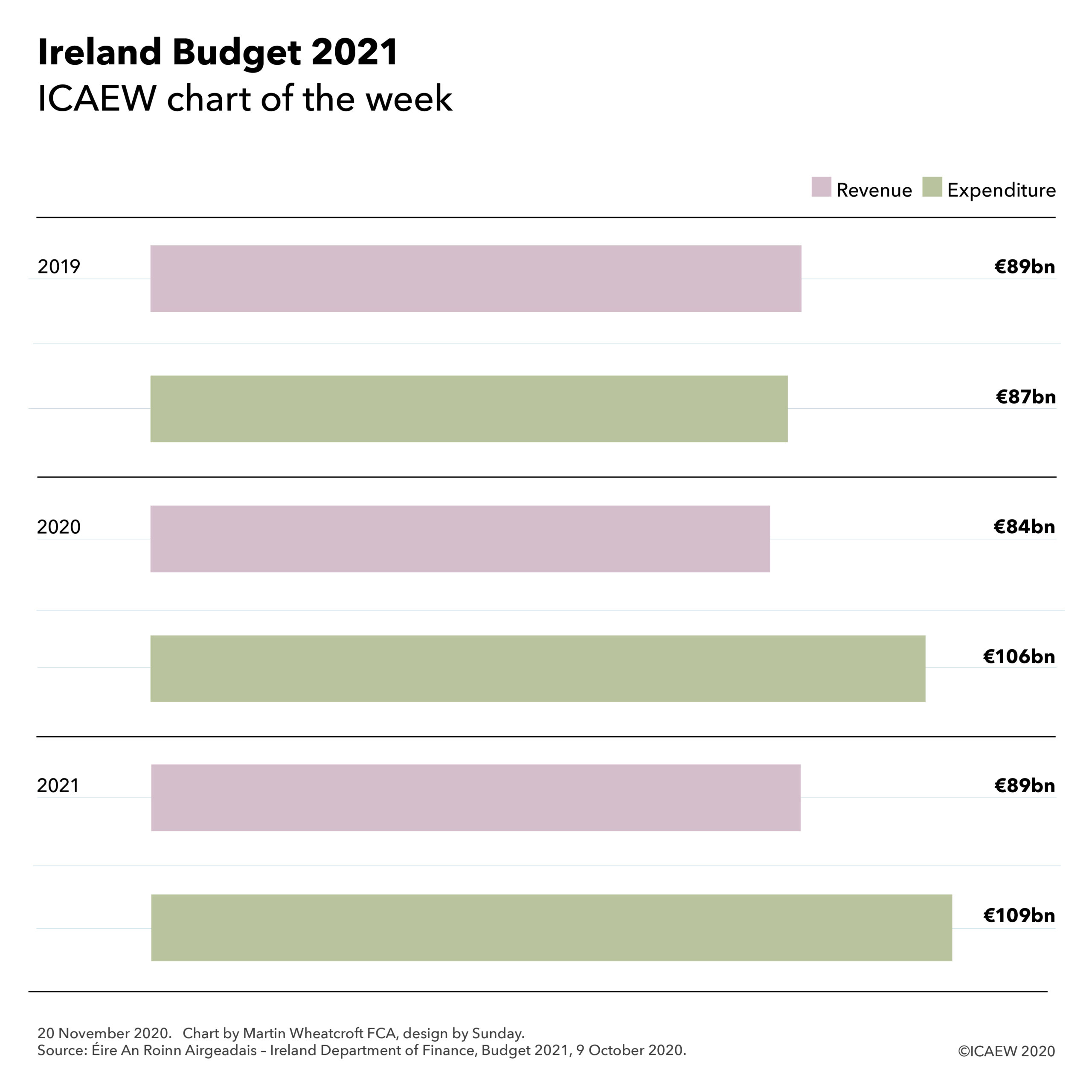
ICAEW chart of the week: Ireland Budget 2021

20 November 2020: The #icaewchartoftheweek takes a look at the Irish Government’s fiscal plans for 2021 and how it plans to tackle the twin headwinds of COVID and Brexit.

Ireland Budget 2021:

2019 Revenue £89bn, expenditure £87bn

2020 Revenue £84bn, expenditure £106bn

2021 Revenue £89bn, expenditure £109bn

The Irish Government held its Budget 2021 announcement last month, setting out how the coronavirus pandemic has damaged the public finances in 2020 and how it plans to help the economy recover in 2021.

There was a fiscal surplus of €2bn in 2019 with general government revenue of €89bn exceeding expenditure of €87bn, but the pandemic has squeezed revenues (expected to fall to €84bn in 2020) and increased spending (expected to increase to €106bn), resulting in an expected shortfall of €22bn this year. This is equivalent to 6.2% of GDP or 10.7% of Gross National Income (GNI).

General government revenues are forecast to recover to €89bn in 2021, well below the level they would have been without the pandemic. Although much of the emergency spending incurred in 2020 will not be repeated, the Irish Government still plans to increase total spending in 2021 to €109bn. This reflects social payments continuing to run at a higher level (€32bn in 2019, €39bn in 2020 and €38bn in 2021) and greater capital investment (€10bn, €12bn and €12bn), but mainly reflects extensive Brexit-related spending to soften the anticipated adverse economic impacts of increased trade frictions with the UK from 1 January 2021, as well as a €3bn COVID recovery fund intended to help the economy recover from the pandemic. 

As a consequence, the fiscal deficit in 2021 is forecast to be €20bn, 5.7% of GDP and 9.8% of GNI.

General government debt is expected to increase from €204bn at the end of 2019 to €219bn in December 2020 and €239bn in December 2021. This is equivalent to 57%, 63% and 67% of GDP which may not appear to be that high, but with a much wider gap between GDP and GNI than most countries, the debt-GNI ratios of 96%, 108% and 115% are much more of a concern.

Fortunately, interest costs in 2021 are expected to be around €1bn lower despite the significant increase in debt, reflecting the extremely low interest rates available to Ireland as a member of the Eurozone.

The uncertainties surrounding the Irish economy, the pandemic and Brexit mean that Ireland’s Department of Finance decided to publish a one-year economic and fiscal forecast this year instead of the normal five years. They will be hoping for clarity to emerge over the coming year!

This chart was originally published on the ICAEW website.

COVID tips Croydon Council over the edge into bankruptcy

17 November 2020: Croydon Council has gone into section 114 ‘bankruptcy’ following years of overspending, losses on commercial investments and the effects of the coronavirus pandemic. What went wrong?

Croydon Council issued a section 114 notice on Wednesday 11 November 2020, the first local authority to do so since Northamptonshire County Council went bust in 2018.

The move by Lisa Taylor, Croydon’s finance director and section 151 officer, followed pre-pandemic losses of £163m in 2019-20 and £221m in 2018-19 and the publication last month of a highly critical public interest report by external auditor Grant Thornton. A central government commissioned governance review is underway.

The public interest report was highly critical of how Croydon Council has run its finances over the last few years, with findings including the use of capital funding to cover operating losses, £545m borrowed over a three-year period – much of which was used to invest in commercial properties – and serious failings in governance in addressing the financial situation facing the council. Grant Thornton reported that General Fund and Earmarked General Fund reserves had reduced from £58.2m at 31 March 2016 to £16.6m at 31 March 2020, and conclude with the following statement:

“Had the Council implemented strong financial governance, responded promptly to our previous recommendations and built up reserves and addressed the overspends in children’s and adult social care, it would have been in a stronger position to withstand the financial pressures as a result of the COVID-19 pandemic. The Council needs to urgently address the underlying pressures on service spends and build a more resilient financial position whilst also addressing the long-term financial implications of the capital spending and financing strategy together with the oversight of the Council’s group companies.”

The section 114 notice places a stop on non-statutory expenditures, resulting in the potential closure of some local services, redundancies to save costs and increasingly strained calls to the Ministry for Housing, Communities & Local Government (MHCLG) asking for a bailout. It highlights a budget gap of at least £30m and additional risks of £37m or more.

Croydon is not alone in suffering from significant cuts in funding over the last decade and cost pressures in adult and child social care provision in particular. However, weak financial governance, a failure to address cost pressures, inadequate reserve levels and increased balance sheet risk from debt-financed commercial property investments have all made it more vulnerable to a crisis.

Although it is perhaps not surprising that Croydon has failed, given the issues highlighted by its external auditors, more section 114 notices are likely over the coming months as even well-run councils struggle to cover income shortfalls. 

The government will also be concerned about the number of councils planning to cut local services and investment in their local economies over the next few years, just as it is hoping to rebuild the economy and deliver on its levelling up agenda.

This article was originally published on the ICAEW website.